


What is Firefighting Foam?
Firefighting foam is an extinguishing agent used primarily to control and extinguish Class B fires involving flammable or combustible liquids, such as petroleum products. It is produced by accurately mixing foam concentrate with water at a specified ratio, before introducing air through specialised discharge equipment such as foam monitors.
When correctly applied, the finished foam forms a stable blanket across the burning fuel surface. This suppresses the release of flammable vapours, separates the fuel from oxygen, provides cooling through its water content and helps prevent reignition.
At tank farms, refineries and fuel storage facilities, water remains essential for cooling exposed tanks and equipment, protecting nearby assets and limiting fire spread. However, water alone will generally not extinguish a large surface fire involving a hydrocarbon fuel that does not mix with water.
Effective foam application depends on the complete system. The foam concentrate, water supply, pumps, proportioning equipment, monitors and nozzles must be compatible and capable of delivering the required foam quality, application rate and discharge pattern for the specific fuel and hazard.
When is firefighting foam essential?
Foam is commonly used wherever significant quantities of flammable or combustible liquids are stored, processed or transferred. Typical applications include:
- Petroleum storage terminals
- Refineries
- Petrochemical facilities
- Aviation fuel storage and distribution
- Marine terminals
- Chemical processing plants
- Fuel loading and unloading facilities
- Large hazardous liquid storage areas
In these environments, firefighting foam helps control fires rapidly while reducing the risk of reignition and escalation.
Types of firefighting foam
Different foam concentrates are designed for different fuel hazards.
-AFFF (Aqueous Film Forming Foam)
AFFF has historically been one of the most widely used foams for hydrocarbon fuel fires because of its rapid extinguishing performance. Traditional AFFF formulations contain fluorinated compounds (PFAS), which are increasingly restricted in many parts of the world due to environmental concerns.
-AR-AFFF (Alcohol-Resistant AFFF)
AR-AFFF is designed for both hydrocarbon fuels and water-miscible liquids such as alcohols, where standard AFFF is not suitable.
-Fluoroprotein and FFFP
Fluoroprotein and film-forming fluoroprotein (FFFP) foams are commonly used where increased burnback resistance and durability are required.
-Fluorine-Free Foam (F3)
Fluorine-free foams (F3) are increasingly being adopted as alternatives to fluorinated foams. Before changing foam concentrate, facilities should verify that their firefighting system is compatible with the selected product and continues to meet the applicable design requirements.
How firefighting foam is applied
Selecting the correct foam concentrate is only part of an effective firefighting system. The way the foam solution is delivered to the fire is equally important.
Foam monitors
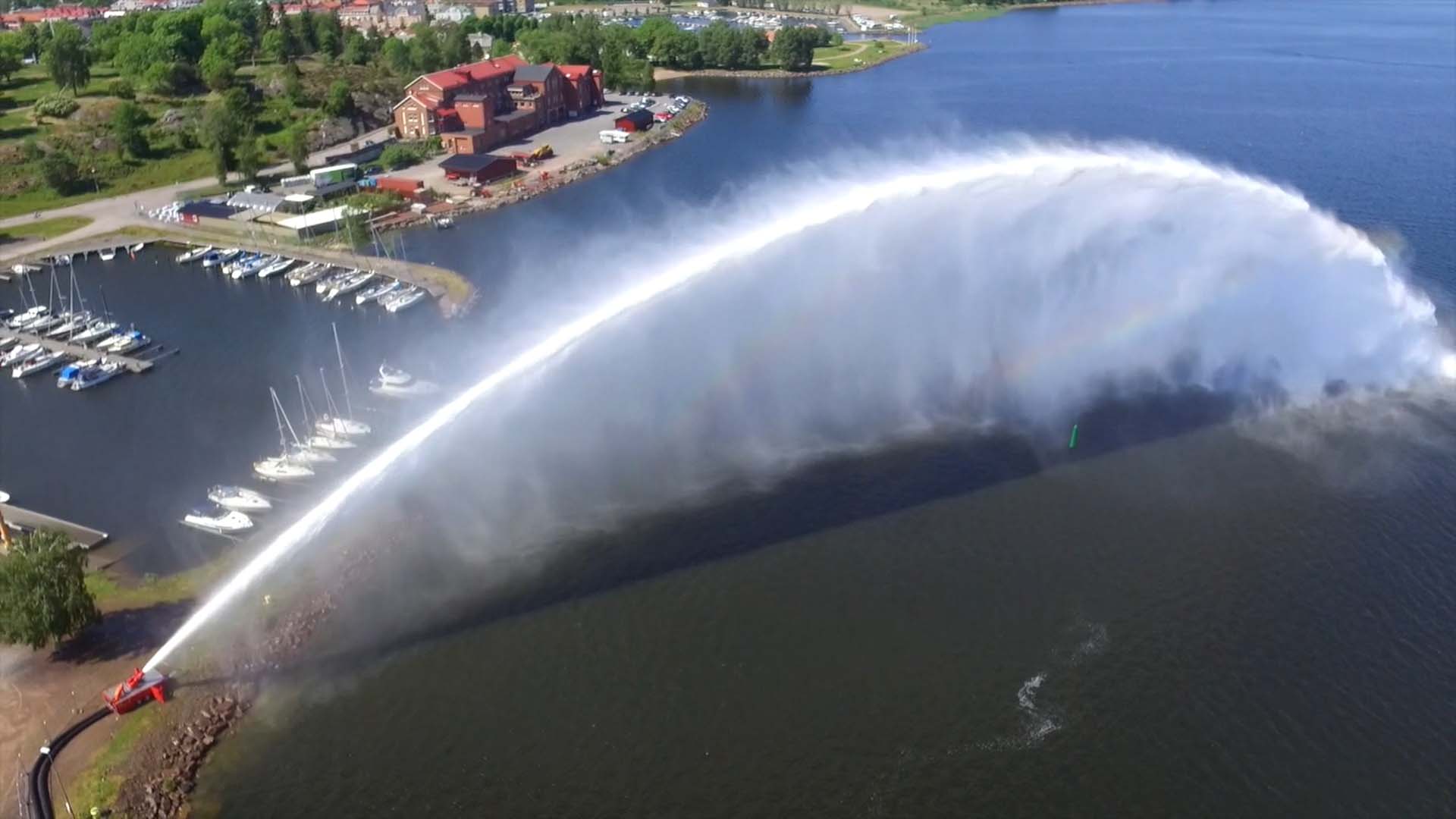
For large storage tanks and spill fires, foam solution is commonly discharged using fixed or mobile foam monitors positioned outside the hazard area. The foam should be applied as gently as practical so it spreads across the fuel surface without unnecessarily disturbing the burning liquid.
High-capacity monitors such as the FFS MT 1200 M and FFS MT 2400 are designed to deliver the large flow rates required for industrial firefighting while providing long throw distances and effective coverage.
Fixed foam systems
Many storage facilities use fixed foam systems that discharge foam through devices installed on or around storage tanks. Depending on the tank design and the protected hazard, these may include top application systems, rim seal systems for floating-roof tanks or other fixed foam discharge arrangements.
Foam Application Rates
Foam systems are typically designed in accordance with recognised fire protection standards such as NFPA 11 and other applicable international standards. These establish minimum application rates based on factors including the fuel, storage configuration and method of foam application.
For example, under NFPA 11 design guidance, a 60-metre-diameter hydrocarbon storage tank protected by top application may require approximately 11,600 litres per minute of foam solution.
Delivering the required application rate depends on the complete firefighting system. The pump must provide sufficient water flow and pressure, the proportioning equipment must introduce foam concentrate at the specified concentration, and the discharge equipment must apply the finished foam effectively to the fuel surface.
Accurate Foam Proportioning
Foam concentrate must be mixed with water at the concentration specified for the foam concentrate and system, commonly 1%, 3% or 6%.
Too little concentrate may prevent the finished foam from achieving its intended performance. Using more concentrate than specified does not necessarily improve performance and increases concentrate consumption.
For high-capacity mobile firefighting systems, inline jet pump proportioners provide a straightforward method of introducing foam concentrate into the water stream. With no moving mechanical parts or external power requirement, they are suited to demanding industrial firefighting applications.
The FFS JPS 3000 is designed to proportion foam concentrate into high-flow water streams supplying large-capacity monitor operations.
Selecting the right firefighting equipment
Effective foam firefighting depends on delivering the required quantity of finished foam to the fire for the required duration. Achieving that performance requires more than selecting the right foam concentrate - it also depends on the correct combination of pumps, proportioning equipment and monitors.
FFS designs and supplies high-capacity mobile firefighting systems for industrial applications, including:
- Mobile firefighting pumps
- Foam monitors
- Jet pump proportioners
- Complete mobile firefighting solutions for large-scale industrial hazards
If you're specifying a new foam firefighting system or reviewing an existing installation, our team can help identify the equipment best suited to your operational requirements.
Explore our jet pump proportioners and mobile firefighting systems here:
https://www.fifisystems.com/land-based-systems
The information presented is intended for general informational purposes only and reflects generally accepted fire protection practice. Fire protection requirements vary between facilities and jurisdictions. Site-specific solutions should always be based on applicable codes and standards, qualified fire protection engineering and hazard-specific risk assessments.


