


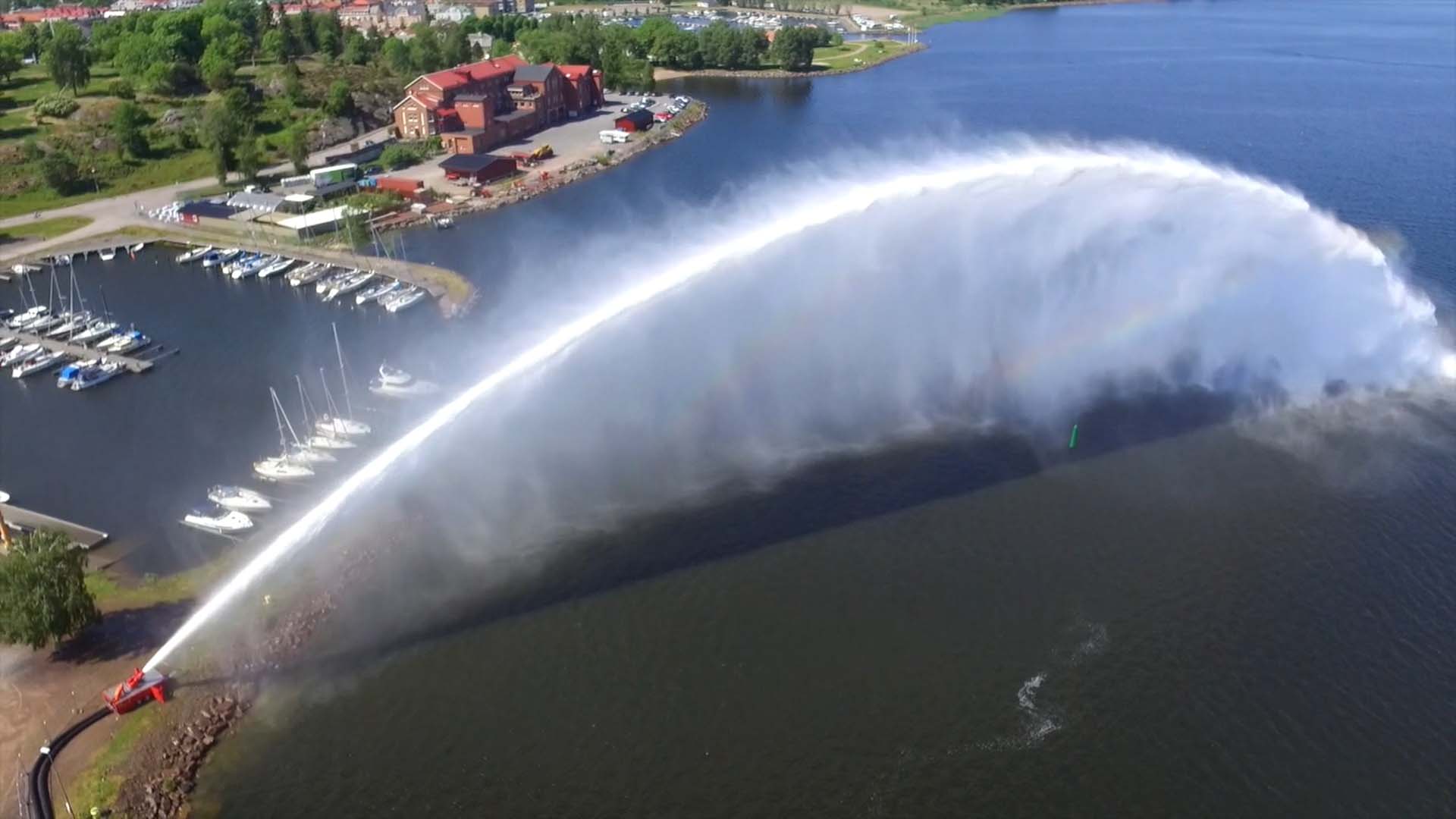
What Is a Mobile Pump Unit (MPU)?
A mobile pump unit (MPU) is a transportable firefighting pump designed to supply water at the flow rate and pressure required for emergency firefighting operations.
Unlike a fixed fire pump installation, a mobile pump unit can be transported and deployed where additional firefighting capacity is required. MPUs can supply firefighting monitors, hose lines, temporary water distribution systems and other mobile firefighting equipment, making them valuable assets at industrial facilities, tank farms, terminals, refineries, ports and other high-risk sites.
In practical terms, an MPU takes water from a suitable supply and delivers it at the pressure and flow required by the firefighting operation. How that water reaches the pump depends on the design of the unit and the available water source.
Mobile pump unit vs. fixed fire pump
A fixed fire pump forms part of a permanently installed fire protection system and is connected to dedicated fire water infrastructure.
A mobile pump unit provides firefighting water at the required flow and pressure but can be transported and positioned according to the incident or operational requirement.
This flexibility makes MPUs particularly valuable for emergency response, temporary fire protection during maintenance or shutdowns, and situations where existing infrastructure is unavailable or cannot provide sufficient hydraulic performance.
When is a mobile pump unit used?
Mobile pump units can be used when:
- A permanent fire water system is not available
- Existing fire water infrastructure cannot provide sufficient flow or pressure
- Temporary firefighting protection is required during maintenance or shutdowns
- Additional pumping capacity is required to support an existing fire water system
- Emergency response equipment needs to be deployed to different locations
- An alternative water source needs to be incorporated into the firefighting response
Depending on the design of the MPU and the available water source, the unit may operate from a pressurised supply, draft directly from open water, or receive water from a separate lift pump.
How does a mobile pump unit work?
A mobile pump unit receives water from an available source and delivers it at the flow rate and discharge pressure required by the firefighting equipment.
The configuration depends on both the pump design and the available water supply.
Drafting from an open water source
Some mobile pump units are designed to draft directly from open water sources such as rivers, reservoirs, harbours or the sea.
Conventional drafting uses a suction hose between the water source and the pump. Because the pump must establish sufficient suction to draw water into the system, performance is subject to practical suction lift limitations.
Actual performance can be affected by:
- Vertical suction lift
- Suction hose diameter and length
- Friction losses through hoses and fittings
- Water temperature
- Altitude
- Pump characteristics
- Site conditions
These factors need to be considered when determining how much water can actually be delivered under operating conditions.
Supplying water with a submersible lift pump
Where the water source is below the operating level of the main firefighting equipment, conventional suction drafting is not always the most practical solution.
A submersible lift pump provides another approach by placing the pump directly in the water source and delivering water onwards to the firefighting system.
The FFS SFP 300 LP is designed for this role. The pump is lowered directly into an open water source and can establish a high-volume water supply without the suction lift and priming limitations associated with conventional drafting.
This makes it particularly useful where water must be taken from sources such as harbours, reservoirs, rivers or the sea, especially where access, elevation differences or suction conditions make conventional drafting difficult.
The SFP 300 LP can supply water onwards to mobile pump units or other firefighting equipment, allowing the water-lifting and pressure-boosting functions to be handled separately where the application requires it.
Boosting an existing water supply
Where a pressurised water supply already exists, such as a fire water main or hydrant network, a suitable mobile pump unit can be used to increase the pressure available to the firefighting operation.
Depending on the capacity and characteristics of the upstream supply, boosting may also increase the flow delivered to the firefighting equipment.
The available inlet conditions remain important. A mobile pump cannot compensate for an inadequate source-water supply, so the performance of the complete system depends on both the MPU and the water available upstream.
Boosting can therefore be valuable where an existing fire water system requires additional hydraulic performance to support monitors, hose systems or other high-demand firefighting equipment.
What makes a mobile pump unit self-contained?
Many industrial mobile pump units are configured as self-contained systems that can operate independently of external electrical power and permanent pumping infrastructure.
Depending on the unit, typical features can include:
- A diesel engine to drive the pump
- An onboard fuel supply
- Battery starting systems
- Integrated engine cooling
- Control and instrumentation systems
- Priming equipment where required
- Suction and discharge connections or manifolds
This allows trained operators to deploy the equipment rapidly without first establishing a permanent pumping installation.
Choosing the right mobile pump unit
Selecting the correct MPU starts with the hydraulic and operational requirements of the application.
Important considerations include:
- Required flow rate
- Required discharge pressure
- Available water source
- Inlet pressure or suction conditions
- Hose lengths and friction losses
- Expected operating duration
- Site access and transport requirements
- Compatibility with existing firefighting equipment
These factors determine not only the size of pump required, but also how the complete mobile water supply system should be configured.
Pump performance under operating conditions
Maximum flow figures alone do not determine whether a pump is suitable for an application.
Supplying a single firefighting monitor presents a different hydraulic requirement from supplying multiple monitors, long hose lays or a temporary distribution network across a large industrial site.
Pump performance can also change according to inlet conditions. A unit receiving water under positive inlet pressure may deliver different performance from the same unit operating under suction lift.
Pump selection should therefore be based on verified performance data at the required operating point, taking account of the conditions expected during deployment.
Maintenance and testing
Mobile pump units are emergency response assets and require regular inspection, testing and maintenance to remain ready for operation.
A typical programme may include:
- Engine testing and servicing
- Pump performance testing
- Inspection of fuel and cooling systems
- Battery testing
- Inspection of valves, manifolds and couplings
- Testing of controls and instrumentation
Maintenance intervals and procedures should follow the equipment manufacturer's recommendations and applicable site requirements.
Mobile firefighting solutions from FFS
FFS designs and manufactures equipment for high-capacity mobile firefighting operations, including:
The range allows different equipment to be configured around the demands of the incident, whether the requirement is to reinforce an existing fire water network, establish water supply from an open source, or deploy additional firefighting capacity to another part of a facility.
Explore the FFS range of mobile pump units:
https://fifisystems.com/mobile-pump-units/
The information presented is intended for general informational purposes only and reflects generally accepted fire protection practice. Fire protection requirements vary between facilities, jurisdictions and operating environments. Site-specific solutions should always be based on applicable codes and standards, qualified fire protection engineering and hazard-specific risk assessments.


